
The map was right. The territory moved.
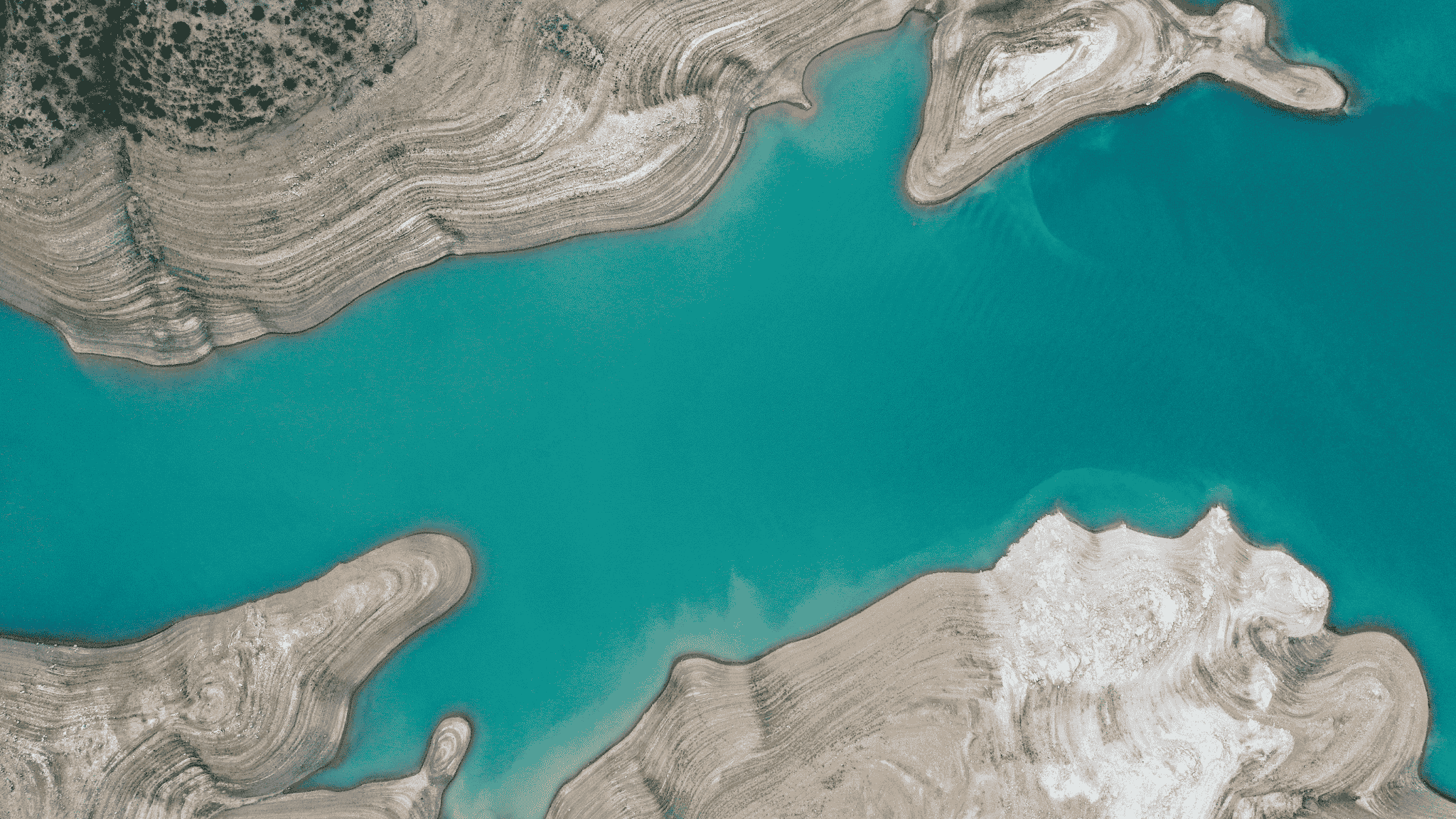
The map is never the territory. Your plan was faithful not wrong. The world it was built for simply stopped being the world you are in.
The map was right. The territory moved.
You are going through the plan once more, the night before you present it. It is a good plan, carefully built, and you are right to be confident in it.
And somewhere in the review, you reach an assumption you wrote weeks ago. That a market would stay open. That a supply would stay steady. That the broad environment the plan rests on would hold roughly as it has. You wrote it as a given, because at the time it was one.
You read it now, and you find you no longer quite believe it.
Nothing in the plan was wrong. The logic is sound, the analysis held, the work is good. This is not a leader who has done the work badly; it is a leader doing exactly what good leaders do, going through it again, making sure it still holds. But the territory the plan was built on has moved while you were building it, in the increasingly fast way territory moves now, and you are only feeling it because you have stopped long enough to notice that one of the plan's foundations has shifted beneath it.
That small moment, the assumption you no longer fully believe as you read it, is the subject of this article.
The best map you could draw
You will probably know the idea that the map is not the territory. No plan is ever the reality it describes; every map is a simplification of a world richer and more shifting than any representation can hold. Hold that as given. It is always true, and it is not the point here.
The point is more uncomfortable than that. Granting that no map is ever the territory, this one was still as faithful as a map could be, the best representation of the ground that could be drawn with what was understood at the time. The partiality was not a failure of yours; it is the condition of all maps. Within that condition, you drew an excellent one.
And then the territory moved.
So, the gap you are now standing over is not the familiar one, the permanent distance between any map and any reality. It is a second gap, opened on top of the first, by the ground shifting after the map was drawn as well as it could have been. No better mapmaking would have closed it, because the map was not the problem. The territory simply did not stay still.
This is the lens worth carrying: frame expiry. Not the failure of a plan, but the quiet expiry of the assumptions a sound plan was built on, while the plan itself still looks entirely sound.
The map was as good as a map could be at the time it was made. That is exactly why it took you so long to notice the territory had moved.
I have seen and felt what this article is describing. As someone who took on a chief executive role as one era was ending and another beginning, I have gone through a plan I believed in and felt its assumptions expiring as I read, the ground shifting under foundations we had laid in good faith on what had, at the time, been solid. It is not a comfortable feeling. It is the feeling of a leader noticing, a beat before others do, that the world the plan was built for has begun to move.
Why a sound plan expires
What expires initially is rarely the plan and rarely the leader. It is the set of assumptions underneath the plan, the ones written as givens because at the time they genuinely were. And the reason they are so hard to catch is precisely that they were reasonable when they were written. The market really was open. The supply really was steady. The environment really was, for the period in which you surveyed it, stable enough to build on. Treating a given as permanent when it was only ever current, is the easiest thing in the world to do, because for a long time the two are indistinguishable.
There is a particular trap inside this, and it catches the capable more than the careless. The better your map, the more you trust it, and the more you trust it, the less you feel the need to keep looking up from it at the territory. This is not laziness. It is the natural economy of competence. You do not re-survey ground you have already mapped well. You get on with building on it, and the building is what keeps your eyes down.
What turns frame expiry from an everyday fact into a leadership problem is that the consequences of a shift travel further than the shift itself, and they travel out of sight. A change in one part of the environment moves into a second, and a third, before it reaches the part your plan depends on. By the time it surfaces where you can see it, it has already spread through places you were not watching, and it arrives looking like a problem with your plan rather than what it is: the late arrival of a shift that began somewhere upstream and out of view. You can survey diligently and still be overtaken, because the territory does not announce its movement. It moves first and shows you later.
This is why the answer is not to check harder. The territory moves whether or not you are diligent. What it asks for is not more verification but a different quality of attention, a continuous awareness of the pace and scale at which the environment is moving, and of how far the consequences of that movement have already travelled toward the foundations you are standing on.
The leader for whom this is the whole job
There is a kind of leader who has never had the luxury of treating frame expiry as an occasional shock, because for them it is the permanent condition of the role.
Think of the head of a national government, or the leader of a global institution whose decisions land across borders and on populations who will live with them for decades. Think of the chief executive of a genuinely global enterprise, operating across regions that move independently and sometimes against one another. For leaders at this scale, the distance between the plan and the territory is not an occasional discovery. It is the central fact of the work. The environment they operate in has never held still, and they know it, so the discipline of leadership is not just the building of a better plan but the unbroken practice of reading the ground beneath it.
They hold the plan and the territory as two different things at all times, and they trust the territory over the plan when the two disagree. What weighs on them is not whether the plan is elegant but the knowledge that the people in their care, citizens, employees across continents, whole communities, will live with the gap between the plan and the ground, and that watching that gap is theirs alone. The plan stops being something to defend and becomes something to test, continuously, against a territory they assume is already moving.
Most leaders are not operating at that scale, and do not need to live at that pitch of vigilance. But the discipline is the same, scaled down. The territory is moving under your plan too. The only question is whether you are still trusting the map so much you have stopped looking at the ground.
What this costs when it is missed
When a leader keeps executing a plan whose territory has moved, the cost does not announce itself as frame expiry. It shows up in four places, each looking like something else.
It shows up first as effort that no longer produces its usual return. The plan is being executed well, by capable people, and it is simply not working the way the map said it would. The leader, seeing good execution and poor results, often responds by demanding better execution, which pushes the team harder against foundations that have already gone.
It shows up second as a team that can see the gap and cannot get the leader to see it. The people closest to the terrain, in the market, in the supply chain, at the edge of the system, usually feel the ground move before the leader does. If the leader is still trusting the map, they will hear those signals as noise, or as excuses, and the people who could have given the earliest warning learn to stop offering it.
It shows up third as a slow erosion of the leader's own credibility. A leader who holds confidently to a plan whose ground has visibly moved does not read as steady. They read as out of touch, and the gap between their confidence and the visible territory becomes the thing the organisation quietly organises around.
It shows up fourth, and most expensively, as a shift that was readable early and workable but was allowed to compound until it was not. The cost of frame expiry is almost always lowest at the moment the territory first moves and highest by the time the plan finally, undeniably, fails against it. Noticing early is not caution. It is the avoidance of a far larger reckoning later.
A practice in four directions
When the territory beneath a plan has moved, the work is not to immediately abandon the plan. It is to lift your eyes from it long enough to see what the ground is actually doing, in four directions.
1. What you are assuming. Go back through the plan and find the assumptions you made as givens. Not the analysis, which you have checked, but the things underneath the analysis you did not think to check because they were obvious when you wrote them. The open market. The steady supply. The stable, peacetime environment. Name them as assumptions rather than facts, and notice which ones you no longer quite believe as you read them.
2. What you are signalling. Notice the confidence you are carrying into the room. If you present the plan with the certainty its foundations once justified, you signal to everyone watching that the ground has not moved, which tells the people who can see that it has to keep that to themselves. The work is to hold the plan with the confidence its logic deserves and the openness its foundations now require, both at once.
3. What the people closest to the terrain are seeing. The earliest signals of frame expiry are almost never in the boardroom. They are at the edges, with the people in contact with the moving ground. Ask them what they are seeing that the plan does not account for, and make it safe for the answer to be unwelcome, because the answer you most need to know, is the one that says a foundation has moved.
4. What the environment is actually doing. Lift your eyes all the way up, to the wider environment and system itself, and ask not whether your plan is sound but whether the world it was built for still holds. Watch the pace and scale of what is moving, and trace the consequences outward, into the second and third places they will travel before they reach you. The point is not to predict. It is to stay in live contact with the territory rather than just the map.
A leadership reality
The map was as good as a map could be at the time it was made. That is exactly why it took you so long to notice the territory had moved.
This is not a reason to trust your maps less. A leader who cannot commit to a plan because the ground might move is no more use than one who clings to a plan after it has. The discipline is not to stop drawing maps, and not to mistake the permanent gap between map and territory for a flaw you can map your way out of. It is to keep one eye on the territory even when the map is good, especially when the map is good, because a trusted map is precisely the one you stop checking against the ground. This is frame expiry met well: not better planning, but a steadier attention to the moving ground beneath the plan.
Your planning is not the constraint. Your capability is intact. The constraint is the quality of judgement you bring to a moving environment, the continuous, unglamorous work of holding the plan and the territory as two different things and trusting the territory when they disagree.
That judgement is not a fixed trait. It can be developed. And in an environment that moves like this one, developing it is no longer optional.
One question worth carrying
What has shifted in the world my plan was built for, and how far have the consequences of that shift already spread further than I have yet traced?
The question is worth returning to often, not once, because the answer changes as the ground keeps moving. Most leaders, sitting with it honestly, find at least one assumption they have been standing on without noticing it has moved, and at least one consequence already travelling toward them that they have not yet traced to its source. Finding it is not a failure of planning. It is the discipline of staying in contact with a world that does not hold still, and the difference between a leader the territory keeps surprising and one who has learned to keep looking.
It is a wise leadership move to trust your map a little less than it has earned, and the ground beneath it a little more.
May you always find wise judgement when certainty is unfindable.